Introduction
Sustainable investing has moved from the margins of capital markets to the mainstream. With climate change accelerating, social inequality growing, and stakeholders demanding stronger corporate accountability, investors – both institutional and retail – are increasingly focused on how profits are made, not just how much is made.
This growing awareness among investors has also created a need for clarity. Terms like ESG, impact investing, and climate investing often appear together, but they represent different philosophies and tools for directing capital toward positive change.
ESG investing, impact investing, and climate investing are often used as interchangeable labels in media, fund marketing, and among investors, but each has distinct objectives, mechanisms, and outcomes.
Recent research suggests that about $45 trillion in assets under management globally are now subject to sustainability criteria, representing roughly a quarter of total global assets. ESG-related funds are growing, though some markets are facing pushback. Meanwhile, the impact investing market alone has surged past US$1.5 trillion in assets under management (AUM) as of 2024, according to the Global Impact Investing Network (GIIN).
In India, too, this shift is accelerating. The Securities and Exchange Board of India (SEBI) now mandates top listed companies to file Business Responsibility and Sustainability Reports (BRSR), while Indian mutual funds with “ESG” labels have collectively surpassed ₹15,000 crore (AUM) as of 2025.
Yet despite this growth, many investors are unclear on what differentiates ESG investing, impact investing, and climate investing – what trade-offs they entail, what kinds of outcomes are expected, and how to measure success. Understanding their differences is crucial for aligning investment strategy with financial returns and values.
ESG vs Impact vs Climate Investing
What Is ESG Investing?
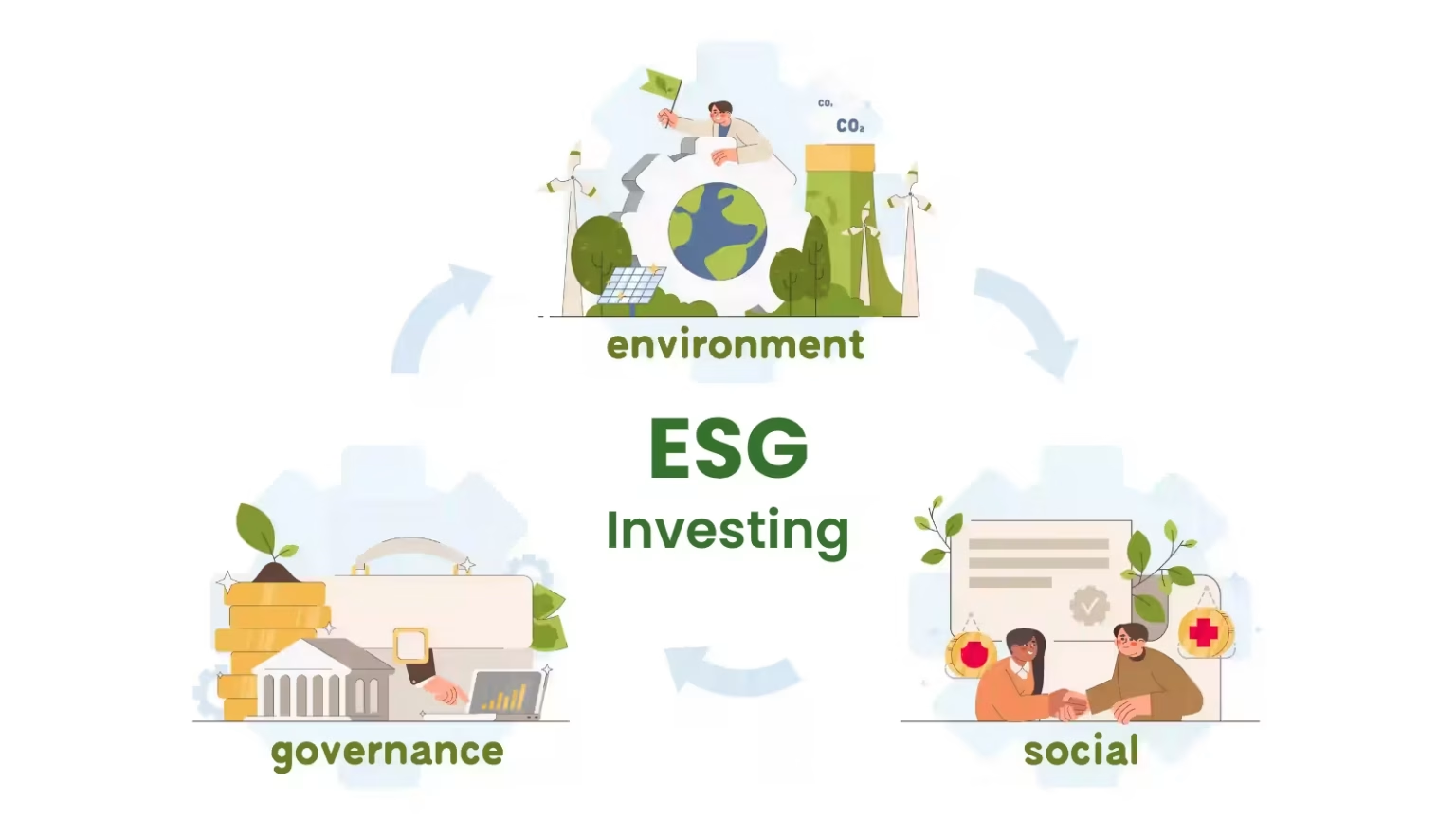
ESG (Environmental, Social, and Governance) investing focuses on how companies manage risks and opportunities related to non-financial factors that can impact long-term performance.
- Environmental: carbon emissions, resource use, pollution control
- Social: employee relations, community impact, diversity, supply-chain ethics
- Governance: board diversity, executive pay, transparency, shareholder rights
The key goal of ESG investing is risk management and value preservation. For instance, MSCI and Sustainalytics provide ESG ratings that assess a company’s exposure to sustainability risks and its ability to manage them.
Investors use these scores to screen out laggards (like fossil-fuel-heavy firms) or reward leaders (companies with strong sustainability policies). An ESG mutual fund might exclude companies with poor labour practices or heavy carbon emissions. It could invest in Tata Power (for its renewable energy transition) but exclude Coal India.
ESG integration is now embedded in over 80% of institutional portfolios globally, according to a 2024 OECD report. In India, ESG investing is becoming mainstream with funds like SBI ESG Exclusionary Strategy Fund, ICICI Prudential ESG Fund, and Quant ESG Equity Fund.
What Is Impact Investing?
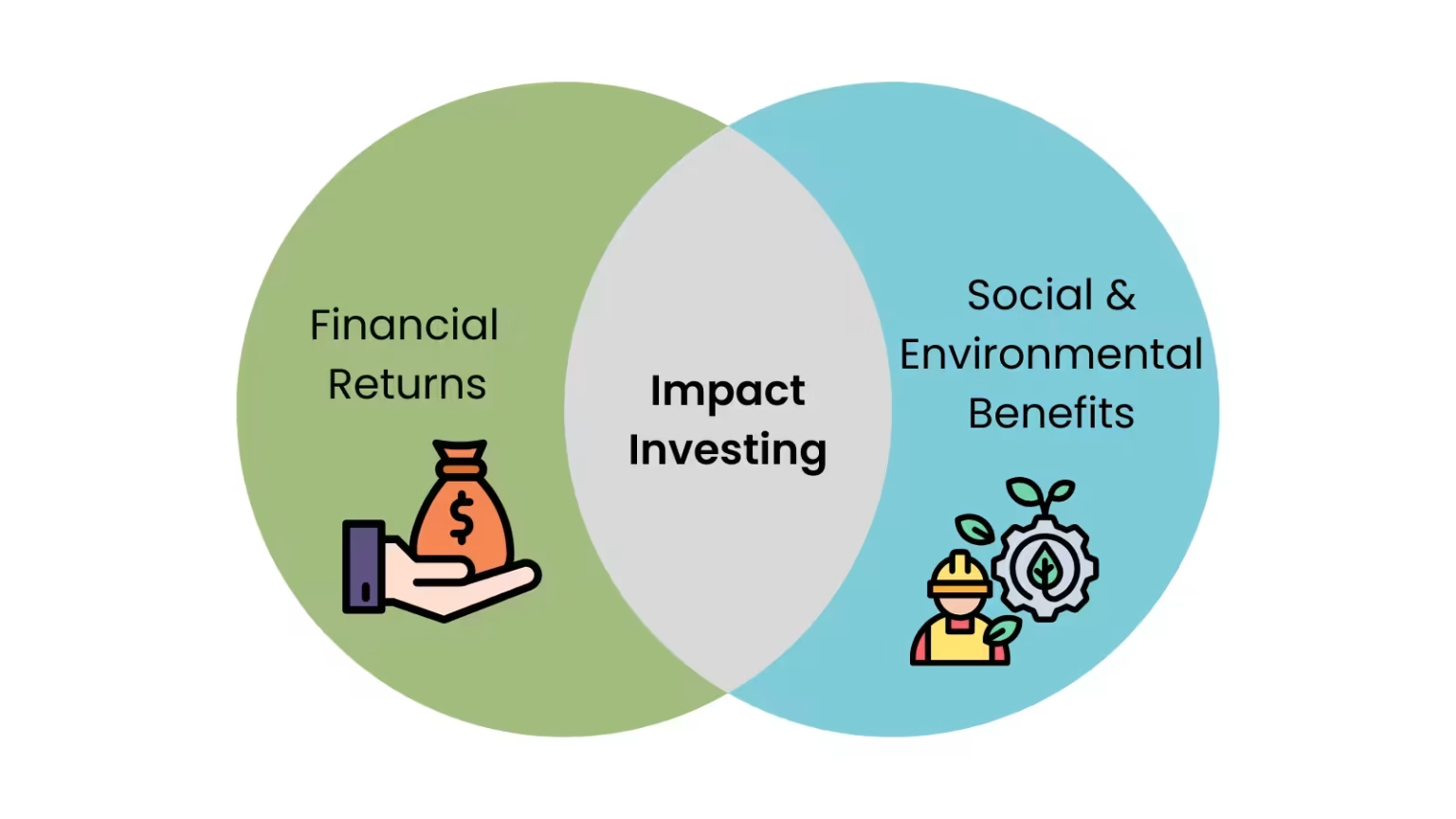
Impact investing is more than just considering ESG risks; it’s about making investments with the intention to generate measurable social and environmental impact alongside financial returns. It is purpose-driven.
Key aspects:
- Intentionality – The investor sets out from the start to contribute positively (e.g. in education, health, poverty alleviation, climate mitigation).
- Measurability – Impact must be measurable (using metrics, frameworks like SDGs, IRIS+, third-party verification).
- Additionality – The impact would not have happened without the investment; the investment adds something beyond “business as usual”.
Impact investing tends to include investments in private equity, venture capital, sometimes debt or bonds, and often in projects or companies not yet fully commercial or scalable.
According to the Global Impact Investing Network (GIIN), the global impact investing market surpassed USD 1.2 trillion in 2024, demonstrating growing recognition that social impact and financial return can coexist.
In India, organizations like Aavishkaar Group, Lok Capital, and Omidyar Network India have pioneered impact investing across sectors like livelihoods, clean energy, and fintech for inclusion.
What Is Climate Investing?

Climate investing is a subset of sustainable investing directed specifically at addressing climate change. This includes mitigation (reducing greenhouse gas emissions) and adaptation (making systems more resilient to climate impacts).
Key focus areas include:
- Renewable energy projects (solar, wind, hydro).
- Energy efficiency (building retrofits, green buildings).
- Carbon capture & storage, sustainable agriculture, climate-smart infrastructure.
- Investment in technologies for adaptation (e.g. flood defences, drought resilient agriculture).
Climate investing may overlap with ESG (environmental factor) and with impact investing (if it seeks measurable climate outcomes), but its primary goal is dealing with climate risks and opportunities.
According to Climate Policy Initiative (CPI), global climate finance flows exceeded USD 1.4 trillion in 2023, yet still need to quadruple by 2030 to meet the Paris Agreement targets.
In India, climate investing is accelerating with domestic initiatives like Climate Angels, Aavishkaar Capital, and Blume Climate Fund already channelling early-stage capital into climate solutions, and SEBI’s green bond guidelines driving institutional participation.
Key Differences
Aspect | ESG Investing | Impact Investing | Climate Investing |
Primary Goal | Manage risks, enhance long-term financial returns while integrating non-financial factors. | Drive measurable social/environmental outcomes + returns; purpose-first. | Tackle climate change directly (mitigation/adaptation) alongside returns. |
Measurement | ESG scores & disclosures (e.g. MSCI, Sustainalytics, etc.), risk metrics, compliance. | Impact metrics frameworks (e.g. SDGs, IRIS+, SROI), baseline vs additionality. | Carbon footprint, greenhouse gas (GHG) reduction, emissions avoided or adapted. |
Approach | Integration & screening (positive/negative screening, ESG incorporation into financial analysis). | Intentional and proactive: investing in projects or firms built for impact; often hands-on. | Thematic or solution-driven: green technologies, climate funds, etc. |
Examples | ESG mutual funds, ESG screened equity portfolios. | Microfinance, affordable housing, clean water, healthcare, social enterprise. | Renewable energy funds, climate tech, sustainable agriculture funds. |
Where the Overlaps Lie
Despite their differences, these strategies overlap significantly:
ESG principles often form the foundation for impact investing and climate investing frameworks.
- A climate fund may apply ESG screens to ensure ethical governance and fair labour practices.
- Many impact investors prioritize climate outcomes as part of their social objectives (e.g., renewable energy access in low-income regions).
For instance, BlackRock’s Climate Transition Fund integrates ESG data while investing in companies enabling decarbonization – merging ESG risk analysis with climate-focused impact.
How Investors Choose Between Them
Investor preference depends on:
- Purpose: Are you aiming for ethical alignment, measurable outcomes, or direct climate action?
- Risk appetite: ESG investing is typically lower risk; impact investing and climate funds can be higher risk but more mission-driven.
- Time horizon: Climate solutions often need longer gestation periods but can deliver outsized returns.
- Measurement capability: Impact and climate investors must track specific metrics – such as carbon reduction, energy efficiency, or SDG alignment.
Institutional investors (like pension funds and sovereign wealth funds) often integrate ESG to safeguard portfolios, while family offices and venture capital lean toward impact and climate investments to drive tangible change.
Real-World Examples
THE GLOBAL PICTURE
- BlackRock Climate Transition Fund: Invests in companies leading the low-carbon transition.
- Temasek’s GenZero platform: Allocates over USD 5 billion to climate solutions and carbon markets.
- LeapFrog Investments: Focuses on impact investing in emerging markets, reaching over 500 million people through inclusive finance and healthcare.
THE INDIAN LANDSCAPE
- Climate Angels backs early-stage climate-tech startups in EVs, clean energy, and circular economy.
- HDFC ESG Fund integrates ESG metrics into Indian equity investments.
- Aavishkaar Capital and BlueOrchard back impact funds with climate components (renewable energy, sustainable agriculture).
- The India Green Energy Fund and NIIF are channelling institutional capital into renewable infrastructure.
Challenges & Criticisms
While sustainable investing has scaled rapidly, each approach faces unique hurdles:
ESG: Greenwashing, Inconsistent Scoring, and “ESG Washing”
- Greenwashing concerns: Many companies promote sustainability initiatives in marketing but continue practices that harm the environment or communities. This creates scepticism around how genuinely ESG-aligned certain investments really are.
- Inconsistent scoring: ESG ratings differ significantly across agencies like MSCI and Sustainalytics due to varying methodologies. For instance, a company can score high on governance but still have a heavy carbon footprint – leading to misleading impressions of sustainability.
- Lack of standardization: Without a global ESG reporting framework, companies disclose data selectively, and investors struggle to compare performance accurately. Efforts like ISSB and the EU’s CSRD are improving transparency, but consistency remains a work in progress.
Impact Investing: Measurement Difficulty and Scalability
- Measurement complexity: True impact is difficult to quantify and often relies on assumptions or limited data. Tracking long-term social and environmental outcomes can be costly, especially for smaller funds.
- Limited scalability: Many impact investments, such as affordable housing or rural clean energy projects, are region-specific and low-ticket, limiting participation from large institutional investors.
- Impact washing risk: As the market grows, some funds label themselves “impact-driven” without measurable or verifiable outcomes. This weakens trust and emphasizes the need for standardized impact reporting frameworks like IRIS+ or SDG alignment.
Climate Investing: Policy Risk, Technology Uncertainty, and Transition Costs
- Policy volatility: Climate investing is highly dependent on government incentives, carbon pricing, and renewable energy policies. Sudden regulatory changes can affect project economics or investor confidence.
- Technology uncertainty: Many climate technologies – from green hydrogen to carbon capture – are still maturing. Their future costs, scalability, and commercial success remain uncertain, increasing investment risk.
- Long-term capital needs: Climate solutions often require heavy upfront investment and patient capital. The transition to low-carbon systems takes time, testing investor endurance before financial returns materialize.
Despite these hurdles, the upside is substantial. Navigating policy and tech risks wisely can position investors at the forefront of the climate economy.
The Future of Sustainable Investing
Looking ahead, several trends suggest that ESG, impact, and climate investing are converging and growing stronger.
- Mandatory ESG disclosures: Global regulations (like EU’s CSRD and India’s BRSR Core) will make sustainability data transparent and comparable.
- Climate tech boom: Investments in decarbonization technologies, battery storage, and green hydrogen are expected to exceed USD 3 trillion by 2030 (IEA).
- SDG-linked investing: More funds will align portfolios with the UN Sustainable Development Goals, blending ESG, impact, and climate principles.
- Blended finance models: Combining private capital with public funds to de-risk climate investments in emerging markets.
Ultimately, sustainable finance is shifting from “doing less harm” to actively regenerating the planet.
Conclusion
While ESG investing, impact investing, and climate investing are related and overlapping, they are not the same:
- ESG investing is about incorporating environmental, social, and governance risks and criteria into investment decisions, largely for better financial returns and risk mitigation.
- Impact investing goes further: requiring intentionality, measurable social/environmental outcomes, and additionality.
- Climate investing focuses specifically on climate change – mitigation, adaptation, green technologies – and can overlap with both ESG and impact investing.
For investors, the key is clarity: know your goals (risk mitigation vs purpose vs climate action), your time horizon, your tolerance for trade-offs, and how you will measure success.
Ultimately, the most powerful strategies are those that align values with measurable outcomes, financial return, and take into account the risks and the dynamics of a changing world.
However, an investor could combine all three approaches – choosing a climate fund that adheres to ESG standards and measures impact in terms of CO₂ reduction and community benefits.