Introduction
The early-stage startup ecosystem has expanded rapidly over the past decade, with more founders building innovative companies and more investors looking to participate in the next wave of disruption. Among the biggest shifts in this landscape is the rise of Angel Investing – where individuals directly fund startups at the earliest, most critical stages.
But as startup investing grows more complex, a new model has gained prominence: Angel Syndicates. These structured groups of investors pool their capital and expertise to participate in higher-quality deals, making early-stage investing more accessible, collaborative, and efficient.
Today, angel syndicates are one of the fastest-growing mechanisms for investing in startups in India and globally.
What are Angel Syndicates?
An angel syndicate is a group of individual investors who pool money to invest together in a startup, typically led by a lead investor or syndicate manager. Unlike solo angel investing – where a single individual independently assesses, funds, and supports a startup – angel syndicates operate as a collective, enabling members to benefit from shared expertise, deal access, and reduced risk.
Key features of angel syndicates:
- A lead investor identifies and evaluates promising startups
- Backers (syndicate members) invest on a deal-by-deal basis
- Pooled capital is routed through a structured vehicle such as an SPV
- Lower minimum investments, making angel investing more accessible
- Shared due diligence, reducing time and effort for individual investors
The primary purpose of angel syndicates is to make startup investing easier and more efficient for both investors and founders.
How Angel Syndicates Work
- Deal Sourcing
Angel syndicates rely on the lead investor’s network to source promising startups. These may come through founder referrals, accelerators, personal networks, sector communities, or formal venture platforms.
- Evaluation & Due Diligence
Before presenting opportunities to members, the lead investor conducts a detailed assessment of the startup – reviewing the team, traction, market potential, financials, and risk factors. Members receive:
- A structured deal memo
- Detailed founder, team, and business information
- Access to virtual discussions or Q&A sessions
This reduces the burden on individual investors while improving the quality of investment decisions.
- Investment Structure
Most angel syndicates invest through:
- SPVs (Special Purpose Vehicles) or
- LLPs and pooled investment vehicles
Members participate on a deal-by-deal basis, so there is no obligation to invest in every opportunity. Minimum cheques are typically far smaller than what an individual angel would need to write on their own.
- Post-Investment Support
Once a deal is completed, syndicate investors often contribute in the form of:
- Mentorship
- Sector expertise
- Customer or partner introductions
- Support in future fundraising
This collective value makes angel syndicates particularly attractive to founders.
- Returns & Exits
As with all startup investments, financial returns typically come from:
- Acquisitions
- Secondary share sales
- Strategic buyouts
- IPOs
The time horizon is usually 5-10 years, and returns can vary widely.
Why Angel Syndicates Matter

As startup ecosystems mature, angel syndicates have emerged as a powerful force connecting capital with innovation. Their collaborative model benefits both investors seeking quality deals and founders looking for meaningful support.
- Democratizing Startup Investing
Angel syndicates enable individuals to invest with smaller ticket sizes – often starting as low as INR 1-5 lakh in India – making angel investing more inclusive and diversified.
- Access to Better Deals
Syndicate leads often have strong founder networks and industry credibility, giving members access to curated, high-potential startups that would be difficult to find independently.
- Risk Mitigation Through Shared Expertise
The lead investor’s due diligence, combined with collective expertise, helps reduce individual risk and improve decision-making quality.
- More Value for Startups
Startups benefit from a diverse pool of investors who can provide sector expertise, mentorship, and access to networks – far more than what an individual angel can offer.
- Accelerating Innovation & Ecosystem Growth
Angel syndicates have become catalysts for growth in emerging sectors like:
- Climate tech
- Deeptech
- Artificial Intelligence (AI) / Machine Learning (ML)
- Digital health
- Fintech
They help bridge the gap between innovation and capital, especially in markets where early-stage funding remains limited.
Who Should Consider Joining an Angel Syndicate?
Angel syndicates open the door for individuals who want to back promising startups but don’t have the time, access, or networks to do it solo. They provide a collaborative way to learn, invest, and grow alongside experienced angels.
- First-Time Angel Investors: Angel syndicates offer guided investing, structured evaluation, and lower entry barriers – perfect for those who are just getting started.
- Experienced Professionals: Senior executives, domain experts, and operators can use angel syndicates to leverage their knowledge while gaining exposure to cutting-edge innovation.
- Existing Angel Investors: Seasoned angels join syndicates to diversify their pipeline, collaborate on due diligence, and access better deals.
- HNIs, Family Offices, NRIs: Angel syndicates offer efficient diversification and access to global opportunities without the complexity of solo deal-making.
- Sector-Specific Investors: Those passionate about themes like climate-tech, SaaS, healthcare, or deeptech can join focused syndicates with domain-aligned deal flow.
How to Choose the Right Angel Syndicate
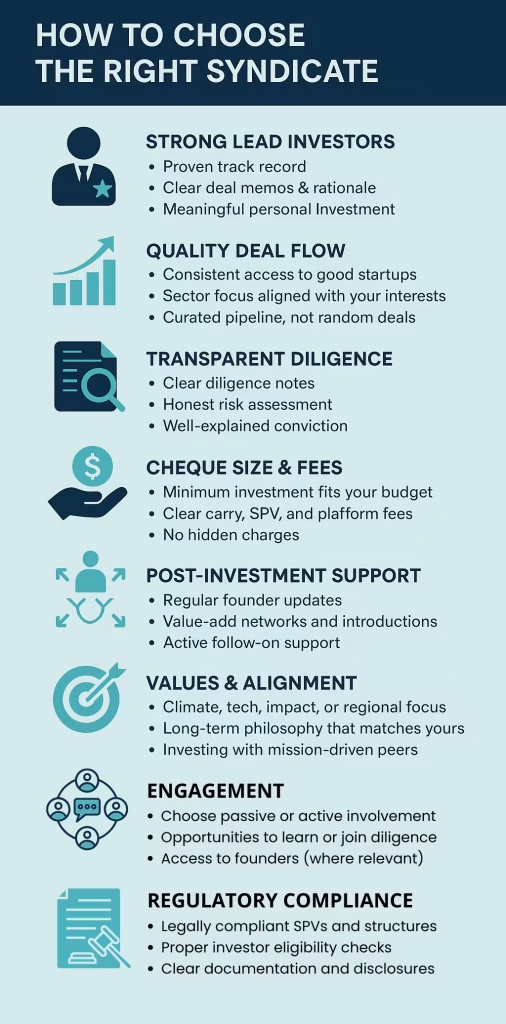
Choosing the right angel syndicate is essential for building a strong early-stage portfolio. It can significantly influence both your investment experience and your eventual returns. Not all syndicates operate the same way – each has its own investment style, sector preferences, risk appetite, and level of investor involvement.
Here are the key factors to consider:
- Track Record & Credibility of the Lead
Look at who is leading the syndicate – their investment experience, founder network, and past successes. A strong lead:
- sources high-quality deals
- provides clear deal memos
- invests meaningful capital personally
A credible lead increases your confidence in the opportunity.
- Quality & Relevance of Deal Flow
Different angel syndicates specialise in different sectors. Choose one whose deal flow aligns with industries you understand or want exposure to. Sector-aligned syndicates can help you evaluate opportunities more effectively and tap into curated, high-quality pipelines.
- Diligence & Transparency
Good angel syndicates are open about how they source deals and how deeply they evaluate them. Look for:
- transparent due diligence notes
- clear articulation of risks
- rationale behind the lead’s conviction
Transparency helps you make informed decisions without needing to run full diligence yourself.
- Investment Size & Fees
Angel syndicates vary widely in minimum cheque sizes and fee structures. Understand:
- the minimum investment per deal
- carry charged by the lead
- any platform or SPV fees
Choose a structure that fits your budget and long-term investment plan.
- Post-Investment Support & Communication
Some angel syndicates simply pool capital, others actively support founders with networks, business development, and future investor connections. Consider how frequently they share updates and how involved they are after the investment.
- Your Preferred Level of Engagement
Decide whether you want a passive experience or prefer being more hands-on. Some angel syndicates offer learning sessions, access to founders, and diligence participation; others are fully managed. Pick the one that aligns with the time and involvement you want.
- Values & Long-Term Philosophy
Finally, look at whether the angel syndicate’s mission resonates with you – climate-tech, women-led startups, impact investing, or regional innovation. Value alignment helps you invest more intentionally and stay committed long-term.
- Regulatory Compliance & Platform Legitimacy
Ensure the angel syndicate operates within the legal and regulatory framework of its jurisdiction. This includes:
- using compliant SPVs or pooling structures
- adhering to investor accreditation/eligibility rules
- proper documentation, reporting, and disclosures
- clear terms for rights, carry, and governance
Working with a compliant platform or lead protects you from legal risks, ensures your ownership is properly recorded, and gives you confidence that the angel syndicate is operating transparently and professionally.
Risks of Joining Angel Syndicates
While angel syndicates offer many advantages, investors must be mindful of:
- Illiquidity of Investments
Angel investments are long-term and typically locked in for 5-10 years. There is rarely a secondary market to sell your stake early. Investors must be comfortable with capital being tied up for an extended period, with no guarantee of interim returns or liquidity events.
- High Failure Rate of Startups
Early-stage startups face significant business, market, and execution risks. Even with a strong lead investor and a good syndicate, some companies will fail. This makes diversification across multiple deals critical rather than relying on a single “winner”.
- Limited Control & Influence
Syndicate investors generally participate as minority shareholders through an SPV. This means you won’t have direct voting rights or influence on key decisions. You rely heavily on the lead investor’s judgment, updates, and ability to represent the angel syndicate effectively.
- Dependence on Lead Investor Quality
Your experience and outcomes are strongly tied to the lead’s expertise, diligence rigour, and network strength. If the lead is inexperienced, biased, or inconsistent, it can impact deal quality, communication, and post-investment oversight.
- Fees & Carry Reduce Net Returns
Platform fees, SPV costs, and carried interest (usually 10-20%) reduce your final returns. While these fees compensate the lead for sourcing and managing the deal, investors should evaluate whether the angel syndicate adds enough value to justify them.
- Regulatory & Documentation Risks
If the angel syndicate or platform uses unclear legal structures, poor documentation, or non-compliant SPVs, investors may face governance issues later, especially at the time of a follow-on round or exit. Ensuring proper paperwork and compliant processes is essential.
- Information Asymmetry
While you receive deal memos and updates, the lead often has deeper access to founders and insights you may not get directly. This information gap means you depend on the lead’s transparency and the quality of their communication.
Angel syndicates reduce investing risks but do not eliminate them.
Examples of Angel Syndicates
Global Players
- AngelList Syndicates – Deal-by-deal syndicates that let lead angels their deals to other accredited investors worldwide.
- Keiretsu Forum – A large global network of accredited angel investors with many regional chapters (active in North America, Europe, Asia).
- Cambridge Angels – UK-based angel network focused on high-growth tech and deep-tech companies (investor community/mentoring).
- SyndicateRoom (UK) – A platform that co-invests with top angel leads and runs EIS/SEIS funds; offers syndicate-style co-invest opportunities.
- Golden Seeds – U.S. angel network focused on investing in women-led businesses (chaptered national angel network).
In India
- Indian Angel Network (IAN) – One of India’s largest angel platforms (investments, sector funds, mentor network).
- Climate Angels – A focused angel syndicate backing climate-tech and sustainability-led startups in India. Active in India and US.
- LetsVenture / LVX Syndicates – A platform that enables lead investors to form syndicates and SPVs for Indian startup deals (rebranded as LVX).
- Mumbai Angels / Chennai Angels / Hyderabad Angels – Regional angel networks in India with many active members and a track record of deals/exits.
- AngelList India Syndicates – AngelList’s India offering support syndicates and SPV deal structures for Indian deals.
- Keiretsu Forum (India Chapters) – Global Keiretsu Forum has active Indian chapters that operate locally as angel syndicates/co-invest groups.
In the Indian context, angel syndicates are also becoming more specialized. Alongside large, generalist networks, sector-focused syndicates are emerging to support founders tackling complex, capital-intensive problems. Climate Angels is one such example – a focused angel syndicate backing early-stage climate-tech and sustainability-led startups. By bringing together climate-conscious investors, operators, and sector experts, Climate Angels enables structured capital, informed diligence, and hands-on support for founders working on clean mobility, sustainable agriculture, renewable energy, water management, waste reduction, and the built environment.
Conclusion
Angel syndicates are transforming the startup investment landscape by making it more inclusive, collaborative, and high-quality. They help investors learn, diversify, and access superior opportunities, while giving startups the capital and mentorship needed to scale.
For new and experienced investors alike, joining a well-run angel syndicate can be one of the most effective ways to participate in the future of innovation. As India’s and the world’s startup ecosystems continue to grow, angel syndicates will play a central role in accelerating entrepreneurship, innovation, and wealth creation.
For investors seeking to support climate innovation in India through a curated syndicate model, explore the Investors page to understand how Climate Angels brings capital, expertise, and impact together.