
Introduction
Angel investing has become one of the most influential forces shaping modern entrepreneurship. From early-stage startups to high-impact climate and tech ventures, angel investors provide the crucial spark that helps ideas turn into scalable businesses.
But what exactly is angel investing, how does it work, and why is it gaining so much attention among both founders and new investors?
This simple, comprehensive guide breaks down the essentials if you are a new investor exploring startup investing opportunities.
What Is Angel Investing?
Angel investing refers to the practice of high-net-worth individuals – known as angel investors, or simply, angels – providing early capital to startups in exchange for equity (ownership) in the company. These funds typically come at the pre-seed, seed, or early-stage level, when the business has high potential but limited financial traction.
Angel investors invest their own money, and their decisions are often influenced by passion, expertise, and belief in the founder’s vision. This makes angel funding more flexible and founder-friendly compared to institutional investing.
How Angel Investing Fits into the Broader Investment Landscape
Angel investing sits at the earliest and most high-risk stage of the investment spectrum, giving investors access to young, high-potential startups long before traditional investors step in. It acts as a high-risk, high-reward alternative asset class that complements more stable investments like stocks, bonds, and real estate.
While conventional assets offer steady growth, angel investing provides the possibility of outsized returns and direct involvement in innovation. It also fuels the pipeline for venture capital and supports ideas that may otherwise never scale. For investors with a long-term view and inclination to build a diversified portfolio, angel investing can be a strategic way to balance traditional wealth-building with exposure to emerging opportunities.
Who Are Angel Investors?
Angel investors are individuals who provide early capital (usually at the pre-seed or seed stage) to startups with high growth potential. Unlike venture capitalists, angel investors – or simply angels – invest their personal funds, which gives them greater flexibility and decision-making autonomy.
Angel investors can include:
- Successful entrepreneurs who want to give back to the startup ecosystem
- Corporate professionals or CXOs diversifying their portfolios
- Industry experts who understand niche markets
- Members of formal or informal angel networks or angel syndicates
What sets angel investors apart is the value they bring beyond money – mentorship, industry connections, market insights, and credibility that helps a young startup attract more investors. What makes them truly special is their willingness to take risks when traditional lenders or institutional investors may hesitate.
Today, angel investing has expanded globally with the rise of angel networks, angel syndicates, and online investing platforms that make startup investing more accessible.
How is Angel Investing Different from Venture Capital?
Angel investing and venture capital differ mainly in the source of funds, investment size, stage of investment, decision process, level of involvement, and risk profile:
- Angel investors are individuals investing their own money, often smaller amounts (typically $10,000 to $100,000), focusing on seed and early-stage startups. They tend to invest based on trust in the entrepreneur and less formal due diligence. Their involvement is often more personal and mentorship-oriented, but they exert less control over the company.
- Venture capitalists manage pooled funds from institutions and investors, investing larger sums (usually millions) in later-stage startups that have demonstrated market traction. VC investments involve thorough due diligence and structured decision-making. VCs often take board seats and exercise significant control or influence to scale the company strategically.
Angel Investing Vs. Venture Capital
Aspect | Angel Investing | Venture Capital |
Source of Funds | Personal funds from high-net-worth individuals | Pooled capital from investors, managed by professional firms |
Investment Amount | Smaller ($10,000–$1 million typical) | Larger ($3 million or more typical) |
Stage | Seed and early stages | Later stages, often post-product/traction |
Decision Process | Fast, informal, personal connection-driven | Structured, analytical, lengthy due diligence |
Control & Involvement | Less control; mentorship and introductions | More control; board seats and strategic input |
Risk | Higher risk; many failures expected, but outsized returns possible | Lower risk; invest after validation, seek growth in later stage |
In summary, angel investing is more flexible, risk-tolerant, and founder-focused at earlier stages, while venture capital is more formal, resource-intensive, and growth-driven at later stages. Angel investors typically engage when companies are just launching, providing capital and advice with less bureaucracy, while venture capitalists enter later with larger checks and more control.
Why Do Individuals Become Angel Investors?
For first-time or aspiring investors, angel investing is attractive because it offers:
- High Returns (with High Risk): Successful startups can deliver 10x–50x returns, but losses are common too. That’s why portfolio diversification is key.
- Participation in Innovation: Investors get a front-row seat to transformative technologies – climate-tech, fintech, clean mobility, AI, energy transition, and more.
- Personal Satisfaction & Impact: Supporting founders, backing purpose-led businesses, and contributing to economic and environmental progress can be personally fulfilling for investors.
- Tax Benefits: Many countries, including India, offer attractive capital gain incentives for early-stage investments.
How Does Angel Investing Work?
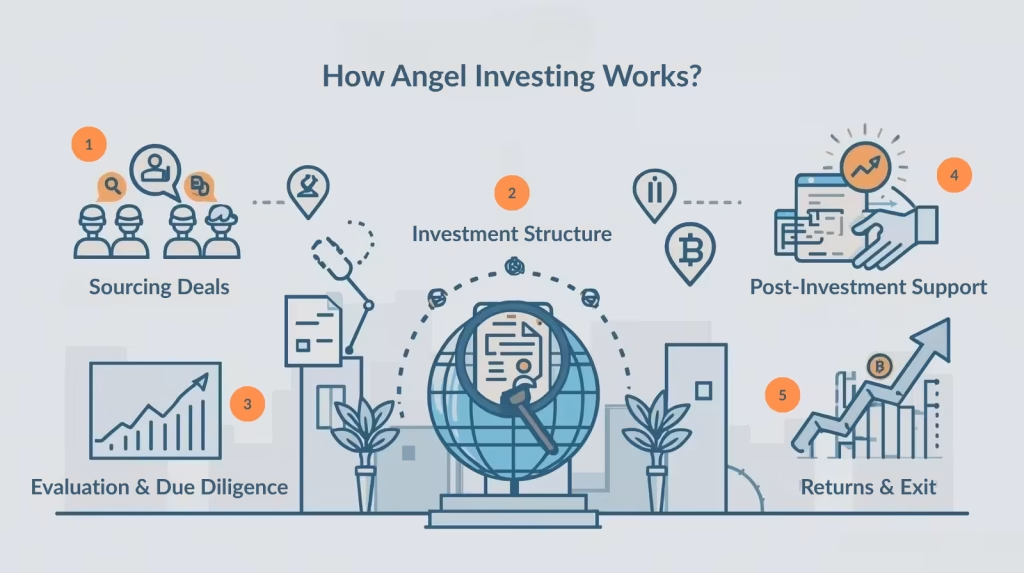
Angel investing follows a structured flow:
1. Sourcing Deals: Angels discover startups through:
- Personal networks
- Angel syndicates and investing platforms
- Startup events, accelerators, incubators
- Direct outreach by founders
2. Evaluation & Due Diligence: Investors look at:
- The problem being solved
- Founder capability and team strength
- Market opportunity and competition
- Traction (users, revenue generated, proof of concept)
- Financial projections and risks
3. Investment Structure: Early-stage investments commonly use:
- Equity rounds (ownership shares)
- Convertible notes
- SAFE agreements (Simple Agreement for Future Equity)
These instruments allow startups to raise funds quickly without complex valuations at the early stage.
4. Post-Investment Support: Smart founders choose angels who bring:
- Business mentorship
- Hiring support
- Partnerships and customer introductions
- Follow-on funding connections
5. Returns & Exit: Angel investors expect returns through:
- Startup acquisition
- IPO (Initial Public Offering)
- Secondary share sale
If successful, returns can be 10x-50x, though such outcomes take years and come with significant risk.
Is Angel Investing Right for You?
Angel investing is rewarding, but it requires patience, understanding, and informed decision-making. Here’s what aspiring investors should consider:
- Your Risk Appetite
Angel investing carries high risk. You should be comfortable with the possibility of losing the invested capital and treat it as a long-term, high-risk allocation.
- Your Liquidity Horizon
Startup investments are illiquid. Exits can take 5-10 years. If you prefer quick or frequent liquidity, angel investing may not be ideal for you.
- Your Interest in Innovation
Angel investing involves engaging with founders and exploring emerging sectors. If you enjoy innovation and problem-solving, this world will feel exciting.
- Your Preferred Involvement Level
You can be hands-on (mentoring, advising) or passive. The decision is yours. But decide early – both approaches are valid.
- Start with Diversification
A portfolio of 10-15 startups improves your chances of landing high-performing winners.
- Begin with Angel Syndicates
Angel syndicates make it easier for new investors by lowering minimum cheques and providing shared due diligence and curated deal flow.
- Comfort with Imperfect Information
Startup decisions require judgement calls based on early signals, founder quality, and intuition combined with structured analysis. You should be comfortable with all that.
- Alignment with Personal Values
Many angels invest in sectors aligned with their beliefs – clean energy, climate solutions, women-led ventures, financial access, etc. This adds deeper meaning to their investment journey.
- Willingness to Keep Learning
The startup ecosystem evolves quickly. Successful angels stay updated through research, conversations, events, and continuous learning.
How to Get Started as an Angel Investor
Entering angel investing doesn’t require decades of experience – but it does require clarity, discipline, and the right platforms. Here’s how first-time investors can begin thoughtfully:
- Start with Learning
Understand the basics of startup funding, valuation, term sheets, and risk. Foundational knowledge helps you make informed decisions and avoid common beginner mistakes.
- Join an Angel Network or Angel Syndicate – like Climate Angels
These communities give you access to vetted deals, expert-led due diligence, and opportunities to invest smaller amounts alongside seasoned investors. It’s the safest and easiest way to start.
- Define Your Investment Thesis
Set clear criteria: the sectors you care about, geography, stage of startup, and typical ticket size. A thesis keeps you focused and prevents emotional or impulsive investing.
- Review Multiple Deals Before Investing
Instead of rushing into the first opportunity, evaluate several startups. Compare traction, founders, market size, and risk. This builds your judgment and pattern recognition.
- Diversify Your Portfolio
Angel investing is high-risk. Spread your capital across 10-20 startups over time to increase the chances of strong returns and reduce the impact of failures.
- Think Long-Term and Impact-Oriented
Startup success takes years. Be prepared for a long investment horizon and focus on founders and ideas that genuinely create value – financially and socially.
Risks in Angel Investing
Angel investing has significant upside – but also meaningful risks. New investors must understand:
- High Failure Rate
Most early-stage startups fail within the first few years due to competition, lack of product-market fit, or execution challenges. Investors should be prepared for the possibility of losing their entire investment.
- Illiquidity – Long Investment Horizon
Angel investments are not easily sellable. Your money may be tied up for 5-10 years, with returns only materialising during an acquisition, IPO, or major funding event.
- Unpredictable Markets & Execution
Startups operate in fast-moving, uncertain environments. Market shifts, regulatory changes, or internal challenges can derail even promising companies.
- Limited Investor Control
Angel investors usually hold small equity stakes, giving them little influence over the startup’s decisions. Trusting the founding team becomes crucial.
- Limited Information in Early Stages
Early-stage startups often lack detailed financials or mature reporting systems, making due diligence harder. Investors must rely on founder conversations, market insights, and independent research.
Mitigating risk requires portfolio diversification, research, and sometimes participating through trusted angel networks or angel syndicates.
Renowned Angel Investors
Across the world, angel investors have played a defining role in shaping startup ecosystems.
Global Scenario
These global angels are known for backing Silicon Valley’s most iconic startups.
- Ron Conway (Silicon Valley)
Often called the “Godfather of Silicon Valley angel investing,” Ron Conway has backed companies like Google, PayPal, Ask Jeeves, and Airbnb. He is known for spotting disruptive founders early.
- Peter Thiel
Co-founder of PayPal and Palantir, Thiel was Facebook’s first outside investor. He continues to back futuristic technologies including biotech, AI, and deep tech startups.
- Reid Hoffman
LinkedIn’s co-founder and a partner at Greylock, Hoffman actively angel-invests in AI, future of work, and enterprise tech companies. He combines capital with deep mentorship.
- Chris Sacca
Founder of Lowercase Capital, Sacca made early bets on Twitter, Uber, Instagram, and Stripe. He is known for backing bold, high-risk, high-reward innovators.
- Naval Ravikant
Founder of AngelList, Naval is considered one of the most influential modern angel investors. His portfolio includes Twitter, Uber, Notion, and Yammer. He also pioneered angel syndicate models, democratizing angel investing globally.
In India
Indian angels have shaped India’s modern startup ecosystem with early bets on high-growth companies.
- Ratan Tata
Chairman Emeritus of Tata Sons, Ratan Tata was one of India’s most respected angel investors. His portfolio included Ola, Paytm, Moglix, Lenskart, and Urban Company.
- Kunal Shah (Founder, CRED)
One of India’s most active startup backers, Shah has invested in 150+ startups including Unacademy, Razorpay, CRED’s portfolio companies, Hippo Video, and more.
- Sanjay Mehta (Founder, 100X.VC)
A veteran in the Indian angel ecosystem, Sanjay Mehta has invested in Oyo, Block.One, LogiNext, and several Web3 startups. He is known for institutionalising angel investing in India.
- Rajan Anandan (Former Google India Head; Partner at Peak XV)
A prolific early-stage investor, Rajan has backed startups across sectors including healthtech, SaaS, climate tech, and fintech.
- Anupam Mittal (Founder, Shaadi.com)
Popular from Shark Tank India, Mittal has invested in more than 200 startups globally including MobKwiki, BigBasket, Rapido, and several D2C and tech startups.
Together, these investors highlight how individual capital – combined with experience and mentorship – can accelerate innovation and bring transformative ideas to life.
Final Thoughts
Angel investing is a cornerstone of the startup ecosystem – empowering founders to build transformative solutions and giving investors a chance to earn meaningful financial and impact-driven returns. If you’re a new investor exploring the startup world, understanding how angel investing works can help you unlock exciting opportunities.
Getting started as an angel investor is less about having large amounts of capital and more about approaching the process with clarity, discipline, and a long-term mindset. By educating yourself, leaning on trusted networks, defining a focused thesis, and building a diversified portfolio, you can confidently participate in the startup ecosystem while managing risk.
With patience and thoughtful decision-making, angel investing becomes not just a financial opportunity but a meaningful way to support innovation and contribute to the growth of high-impact ventures.